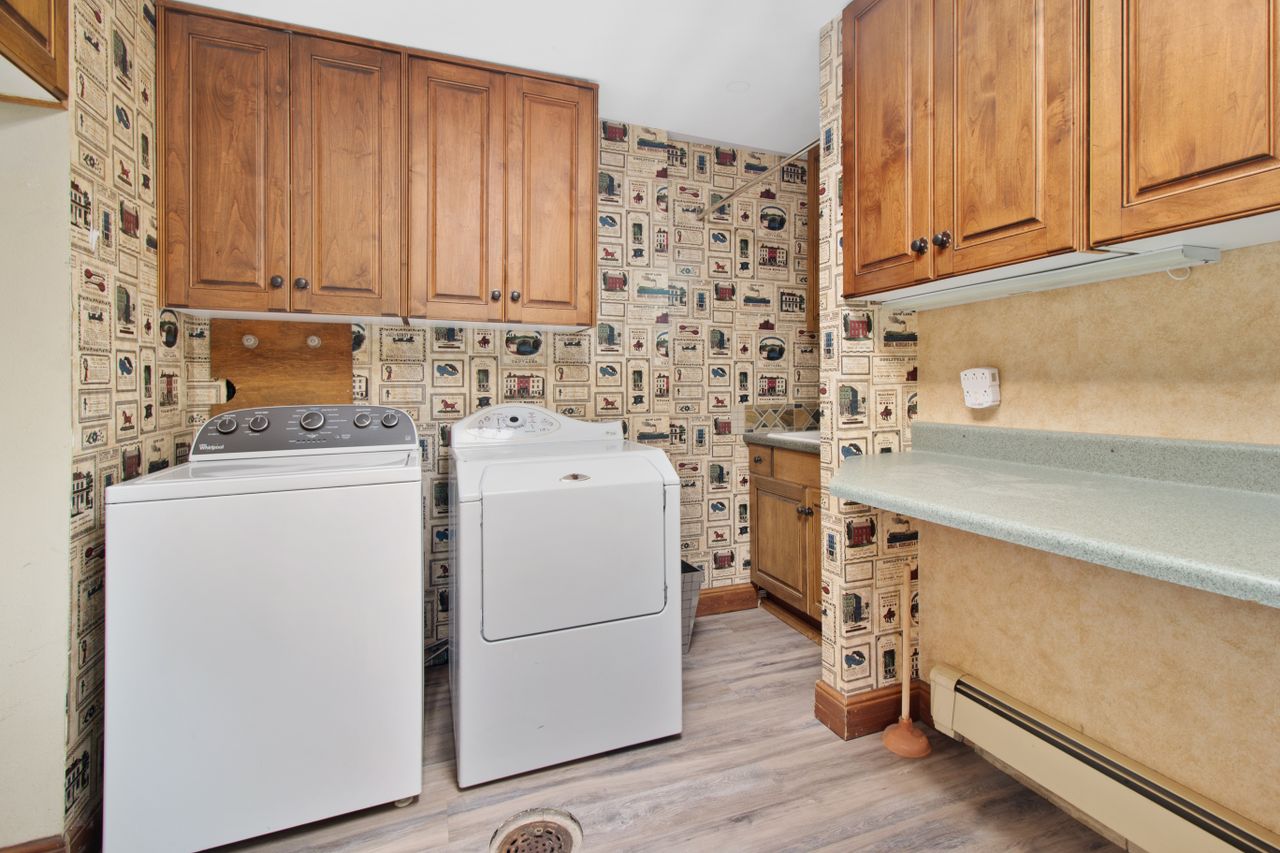
The washer starts its drain cycle and the standpipe fills to the brim. Or the basement floor drain, which has sat quiet for ages, begins to gurgle, smell or leave a damp ring on the concrete. Either way, water is going somewhere you did not plan for, and it is easy to feel unsure whether this is a small nuisance or the start of something bigger.
Basement drains sit at the lowest point of the house. They catch whatever the rest of the system sends downhill, and they are the first place trouble announces itself. That is useful, because it gives you an early signal, and it is also a reason not to ignore it.
What follows explains the usual causes, how to tell a local blockage from a wider one and what the technician looks at when called.

Lint, soap and the overflowing standpipe
A washing machine pushes a large volume of water into a narrow standpipe in a short burst. Along with the water comes lint, fabric fibres, hair and a gummy film of detergent and softener. All of it clings to the inside of the trap and drain below the pipe, building up until the stream can no longer leave as fast as it arrives. The standpipe then fills and spills.
Lint is far more stubborn than it looks. Wet fibres mat together and mix with soap residue into something close to felt. A cable can break up a plug of it, but a coating that lines the pipe may need a more thorough approach, and the technician decides which one fits.
If the washer overflowed once, let the dispatcher know whether other drains were involved. A standpipe that overflows while sinks and tubs run normally points to a local blockage. If other fixtures are slow too, the cause may sit further along the line. The technician sorts out which situation applies, and for a clog that began in the kitchen, the kitchen drain page covers a related set of causes.
Why the floor drain overflows first
A floor drain is a catch point for the whole house. It connects to the same system as the sinks, tubs and toilets, and it usually sits lower than all of them. When something slows the main line, water finds the lowest opening first, and that is often the basement drain.
Two situations look alike from the floor. In one, the drain itself or its short branch is plugged with sediment, lint or debris that washed in over time. In the other, the line beyond it is restricted and the floor drain is simply the first place the pressure shows up. The difference matters, because the second one involves more of the house.
Clues help. If the floor drain only acts up while the washer runs, the washer line is the likely culprit. If it backs up while a shower or the dishwasher runs, or if more than one fixture is affected, the wider line deserves a look. Tell the dispatcher what was running and what you saw. That detail often points to the right tool before the truck arrives. Whatever is happening, the water that has come up is not something to handle or clean up yourself while the problem is active.
Dried-out traps and why the drain smells
Under each drain sits a trap, a bend in the pipe where a little water stays put. That water forms a seal and keeps odours from rising out of the pipe into the room. A floor drain that rarely gets used can lose that seal when the water slowly evaporates, and the smell comes straight up.
Not every smell means a dry trap. A floor drain can smell because it is coated with old soap or debris, or because the line below is partly blocked and holding something it should not. A drain that smells only after the washer has run, or that smells and gurgles at the same time, suggests the cause may be in the line, not in the trap.
The technician can tell which situation applies by looking, and by asking when the smell shows up. A dried trap is a simple matter. A coated or partly blocked line needs cleaning, and sometimes a camera pass to see why it keeps happening. Please do not pour products down the drain to mask a smell. That can make a diagnosis harder and does not address the cause.
Low basements and backups in stormy weather
In parts of the borough, especially the low blocks near Swatara Creek, a basement sits close to the level of the lines in the street. When the ground is saturated after heavy rain, the municipal side of the system can take longer to carry water away, and water that cannot leave quickly may rise toward the lowest openings in a house. Floor drains and laundry standpipes are those openings.
That is a general tendency, not a prediction for any specific house, and it does not mean there is something wrong with your plumbing. Many homes in older neighbourhoods have basements, and many of them have never had trouble. Where trouble has shown up, it is worth having the line looked at before the next stretch of wet weather.
The older streets of Hummelstown Borough have clay and cast iron laterals in many houses. Out in South Hanover Township, the subdivisions mostly have newer lines, though the longer runs can collect debris of their own. Cold winters and thaw also move the ground and can nudge joints out of position over time.
A backup during a storm, with water rising in the basement, is the kind of situation where a call for emergency help for backed-up drains makes sense.
Ready when you are.
Get a straight answer by phoneBackwater valves, explained in general terms
A backwater valve is a one-way valve fitted in a house drain. Its job is to let wastewater flow out and to close if flow tries to run the other way. It is sometimes mentioned in conversations about basements in low-lying areas.
Whether a house has one, or whether it would make sense for that house, depends on how the lines are laid out and what the plumbing looks like. A valve is not a cure for a blocked line. It needs to stay clear and operate smoothly to do its job, so it is a thing to understand more than a thing to buy on impulse.
If you wonder whether your home has one, the technician can often tell you during a visit. Asking is reasonable. Any further work on that kind of device is a different conversation, and the technician will tell you what the options look like and what they would involve.
What local households often wonder
The standpipe and trap below it are usually coated with lint, soap and fibres, so the water leaves more slowly than the machine delivers it. The pipe fills and spills over. Sometimes the cause is a short local blockage and sometimes a restriction further along the line. Tell the dispatcher whether other drains are slow too, and the technician will work out which situation applies.
A trap that has dried out is a common reason, because the water seal that holds odours back has evaporated. Other reasons include a film of soap or debris in the drain, or a partly blocked line. The timing helps: a smell that appears after the washer runs or comes with gurgling suggests the line itself. The technician can tell which applies. Please avoid pouring products down to cover the smell.
Water takes the lowest path, and a basement floor drain is usually the lowest opening in the house. If the drain or its branch is plugged, water has nowhere to go. If the line beyond is restricted, water backs up to the first open point. Stop using water and call. The technician finds out whether the problem is local or part of the wider line.
Often it can, where same-day dispatch is available, though it depends on the schedule, the situation and how much is involved. The dispatcher asks a few questions about what you see and tells you what to expect for your call. You get the price explained before anything begins, and it carries no concealed charges. If water is actively coming up, let the dispatcher know, since that affects how the call is handled.
No. A clogged floor drain or a washer line can cause a backup that has nothing to do with the main line. The pattern gives clues: if only the floor drain acts up, a local blockage is likely. If several fixtures slow down together, or the lowest drains show trouble first, the main line is more likely involved. The technician confirms it on site.
It is a one-way valve in a house drain that opens to let wastewater leave and closes if flow tries to reverse. People mention it for basements in low areas. Whether a house has one, or whether it would suit that house, depends on the layout of the lines. It does not replace a clear line, and it only works if it stays clear. The technician can explain the general idea.
Yes, and more often than most people expect. Lint and fibres from a washer mat together when wet, mix with detergent residue and cling to the inside of the trap and pipe. Over time the opening narrows until the discharge from a drain cycle cannot get through at speed. It is one of the most common reasons a laundry standpipe overflows.
No. Nothing needs to go into a floor drain, and several things can make matters worse. Chemical cleaners can damage pipes and are not something to pour in. Products meant to mask smells do not address the cause and can complicate the diagnosis. Keep the grate clear of clutter. If a drain smells, gurgles or looks different than usual, a call to the dispatcher is the better step.
Notice what was happening when the trouble began: was the washer draining, was a shower running, was it after heavy rain? Check which other fixtures seem slow or noisy. Do not move or open anything on the drain itself. Having those details ready helps the dispatcher figure out the likely cause and send the right person with the right equipment.